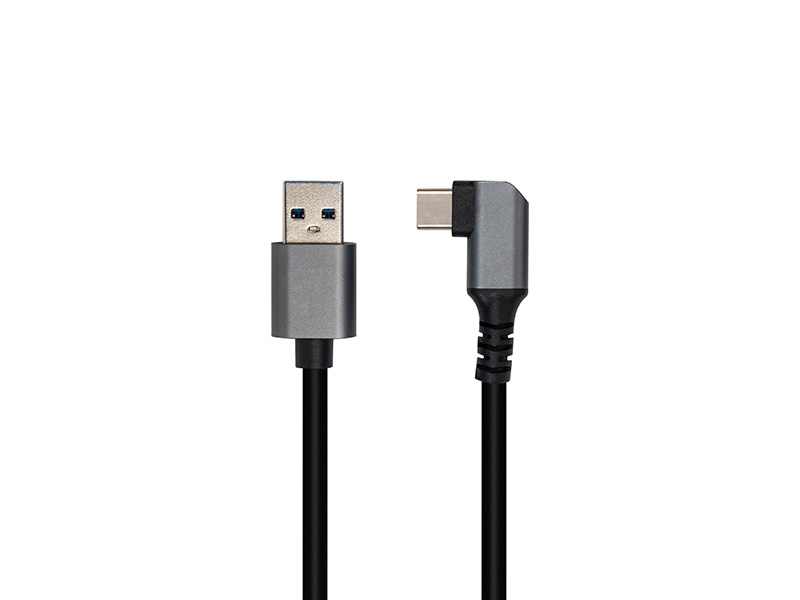
How to choose a good mobile data cable?
Although the phone supports fast charging with 100 watts, changing to a new data cable results in slower charging and frequent power outages; The wires that cost a few yuan each are frequently damaged, and the original wires are expensive. In fact, mobile data cables may seem similar, but they are key accessories that affect charging speed, device safety, and user experience. Choosing the right data cable not only maximizes the fast charging power of the phone, but also eliminates issues such as charging heat and battery damage. Choosing the wrong cable can result in slow charging throughout the entire process and constant hidden dangers. Today, we will teach you the data cable selection skills that even ordinary people can understand. It is easy to avoid tricks and buy durable and cost-effective cables.
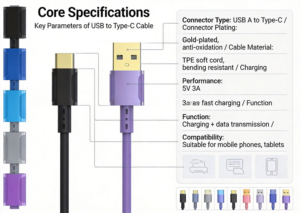
The core first criterion for selecting data cables is to look at the parameters of fast charging and not blindly look at the appearance. Nowadays, most smartphones are equipped with fast charging of over 60W, while ordinary inferior cables only support 3A low current and can only carry a maximum power of 60W, making it impossible to adapt to hundred watt fast charging models. To achieve full speed fast charging, priority should be given to 5A high current cables with E-Marker smart chips. These cables can intelligently adapt to mobile phone fast charging protocols, stably carry 60W-120W high-power charging, and trigger full blood fast charging at the moment of connection, bidding farewell to slow charging lag. If it is a regular 4A cable, even with a high-power charging head, the power will be automatically limited, and fast charging will directly become slow charging.
Secondly, the material of the wire directly determines its service life and charging safety, which is also the most easily overlooked detail. Poor quality data cables use thin and weak copper cores and recycled wires, which not only result in high charging losses and easy heating, but also break and peel after being bent a few times. High quality fast charging cables commonly use thickened copper plated cores, which have better conductivity, lower resistance, higher charging efficiency, and less heat generation. The outer layer is made of TPE soft rubber and woven nylon material, which has stronger toughness, resistance to bending and pulling, and is not easily damaged during daily insertion, storage, and bending, completely bidding farewell to the trouble of “changing production lines every month”.
The workmanship of the interface cannot be ignored, as it is the key to stable charging. Poor quality wire connectors have loose interfaces and rough pin workmanship, making them prone to poor contact during use, resulting in intermittent charging, mismatched pop ups, and long-term wear and tear on the phone interface. The high-quality data cable interface fits tightly, the pins are neat, gold-plated and rust proof, the insertion and removal are smooth and not loose, compatible with various devices such as mobile phones and tablets, and the charging transmission is more stable. At the same time, it is recommended to choose the line length according to one’s own needs. For desktop use, choose the 1-meter regular version, and for bedside and car use, choose the 1.5-meter extended version, which balances convenience and practicality.
Finally, I would like to remind everyone that when choosing a data cable, there is no need to blindly pursue high priced original cables, nor should you be tempted to buy three no products at a low price. Focus on the four core parameters of 5A high current, E-Marker chip, thick wire core, and wear-resistant outer layer, which can perfectly adapt to various fast charging models, restore charging speed to full capacity, and ensure charging safety and extend battery life.
A high-quality data cable is the foundation of daily digital experience. Choose the right cable, say goodbye to the troubles of slow charging, easy damage, and insecurity, and make every charging efficient and reassuring.