
Project Description
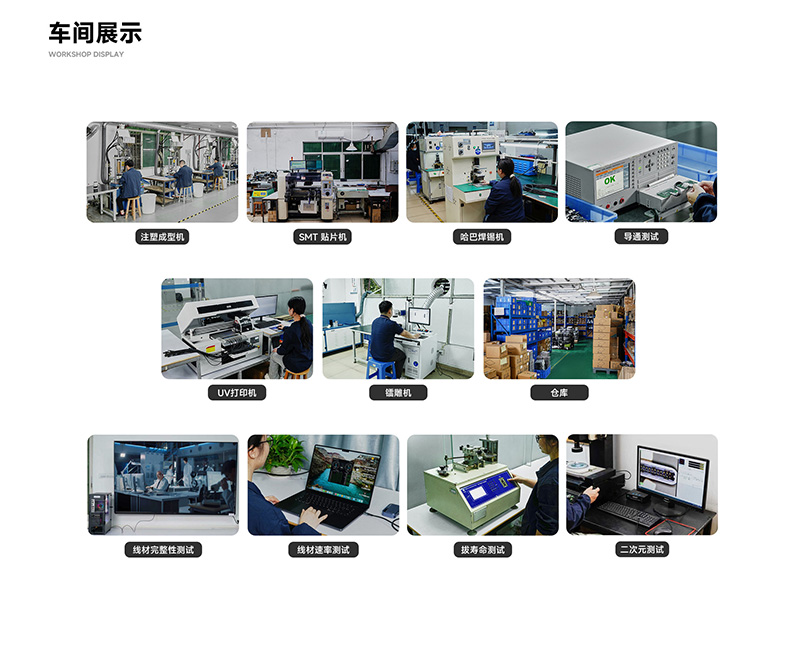
Riveted metal shellOur production workshop spans three major processes: electronic assembly, metal forming, and plastic coating. The core production path is as follows:
Data cable processing flow
1. SMT SMT SMT and reflow soldering (pre core)
The “brain” of the data cable – PCBA circuit board, first enters the SMT workshop. We use a fully automatic solder paste printing and placement machine to accurately mount small components such as fast charging chips, capacitors, resistors, etc., and then perform high-temperature fusion welding through a tunnel reflow oven. This process ensures the stability of the electrical connections on the circuit board, laying the foundation for the subsequent identification of fast charging protocols.
2. Wire cutting and high-frequency hot melt treatment
The cable is cut to a fixed length and stripped in multiple stages by a fully automatic cutting machine. Of particular note is our high-frequency hot melt process, which utilizes high-frequency induction to quickly heat and melt the peeled metal shielding mesh and wire outer skin into shape. This step effectively prevents the risk of short circuit caused by the scattering of the woven mesh, greatly improving the tensile strength of the wire.
3. Precision welding and metal shell assembly
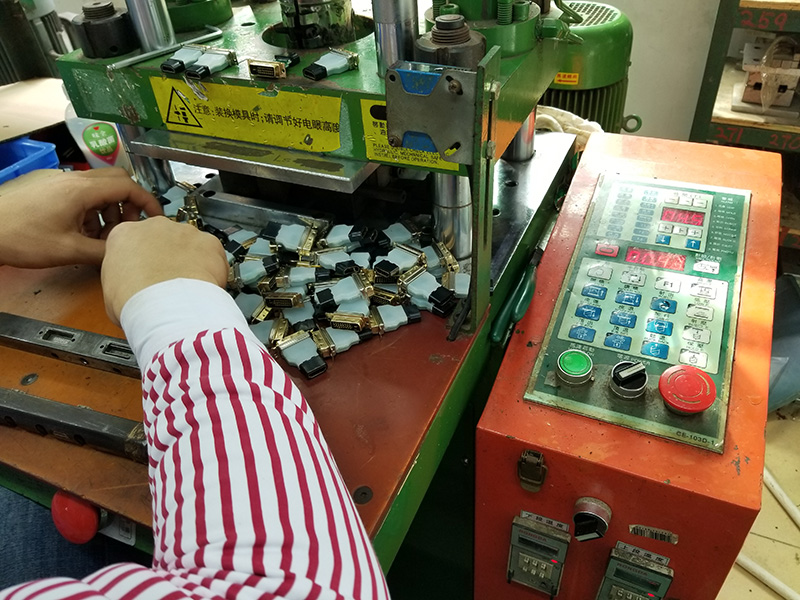
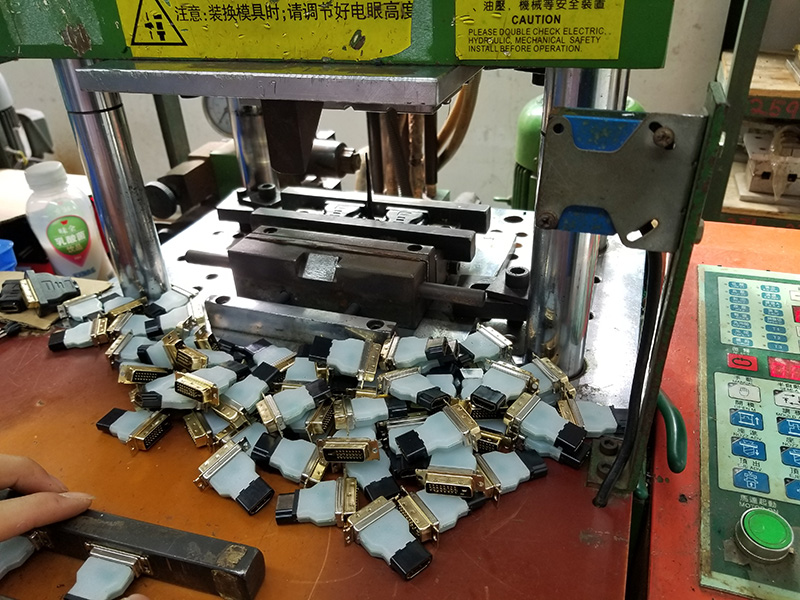
The connection between the wire core and PCBA relies on manual welding or automatic spot welding by skilled welders to ensure that the solder joints are full and round, and to prevent virtual soldering. Subsequently, the metal shell riveting process is carried out, and the U-shaped metal steel sleeve is tightly clamped onto the PCBA through high-precision pneumatic/hydraulic punching machines. The key here lies in the precision control of the mold (we have the ability to independently develop and maintain molds in the engineering department, as shown in Figure 14), ensuring that the plug size fully complies with the standard interface specifications.
4. Injection molding and ultrasonic welding
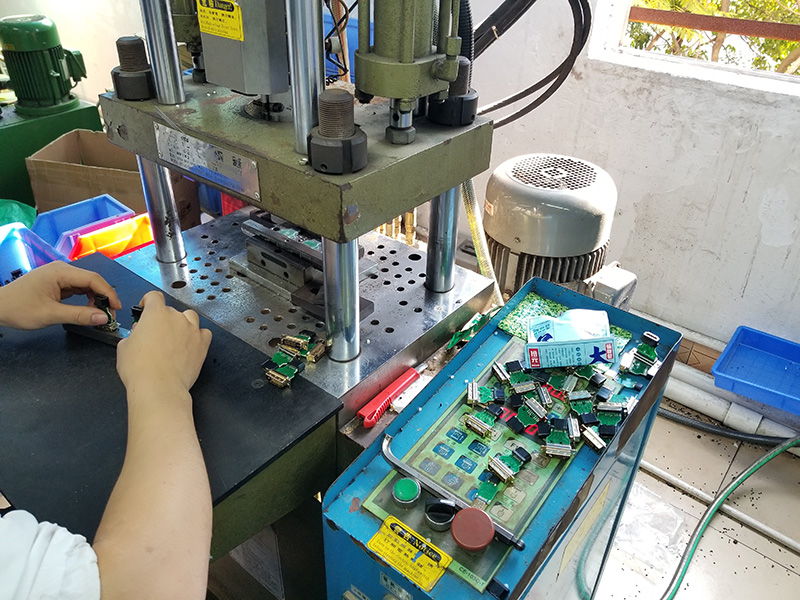
The joints reinforced with metal shells will be sent into the vertical injection molding machine group. The environmentally friendly PVC/TPE material melted at high temperature is injected into precision molds to form an integrated protective wire tail. To eliminate visual defects and potential breakage hazards caused by injection molding joints, we have added an ultrasonic welding process, which uses the heat energy generated by high-frequency vibration to re melt the joint surface of the plastic shell into one, giving the finished product a hard, smooth appearance and strong bending resistance.
2、 Strict multidimensional quality control
Quality is not detected, but produced. We implement full lifecycle quality control, with layers of defense:
1. Source and Process Sampling Inspection (IQC/IPQC)
Incoming inspection is the first priority. We are equipped with high-precision image measuring instruments to measure the micrometer level dimensions of the purchased hardware plugs and metal shells, ensuring accurate and error free raw materials. During production inspections, quality control personnel will randomly inspect the appearance of injection molded joints and use manual trimming to remove fine water outlets and burrs to ensure product texture.
2. Comprehensive final testing of physical and electrical performance (100% full inspection)
This is the most important level. Every assembled data cable must undergo rigorous testing by a wire comprehensive tester. The instrument will instantly complete four tests:
Conductivity test: check whether the internal core wire is completely connected;
Insulation/short circuit test: prevent short circuits between wire cores;
High voltage withstand test: Ensure that the insulation layer can withstand sudden voltage and prevent the risk of electric shock;
Resistance test: Test internal resistance to ensure charging speed and signal transmission quality.
Only when the screen lights up with a huge “PASS” signal, does this data cable truly graduate and be placed in the finished product box.